You probably don't need another business idea.
You probably already have one.
And if you’re certain you don’t, you’re probably looking in the wrong place. It’s rarely a business idea. It’s usually a problem you’ve watched somebody struggle with.
It might be buried inside twenty years of experience. Something people already ask you for help with. A problem you've solved for yourself. A skill you've spent years getting good at. A profession you know inside out. A hobby you understand better than almost anyone you know.
Or maybe you've already tried turning what you know into a course, a service, a coaching programme or an online business, and it didn't sell the way you expected.
That's who I wrote this for.
Not someone looking for a shortcut to getting rich. Someone who knows they have something useful, but hasn't yet worked out the right way to turn it into something people will actually buy.
Because after seventeen years building businesses online, I've become convinced of something.
Building the business is no longer the hardest part. Choosing the right thing to build is.
And there's only one reliable way I've found to know whether you've chosen well.
Test it.
Before the website. Before the funnel. Before six months disappear into creating something.
Find the problem. Find the person. Create the offer. Then put it in front of real people and see what happens.
I learned the importance of that sequence by getting it spectacularly wrong.
Six months building it. Then twelve sales.
Years ago I spent six months creating a course.
I knew the subject. I knew the market. I'd already made well over a million in affiliate commissions across five different niches.
So I did what most experts do. I put everything I knew into it.
Six months later, I launched.
May: 31 sales.
Disappointing, but not disastrous. I decided the price must be the problem, so I cut it in half.
June: 33 sales.
Two extra customers. Half the revenue.
July: 32 sales.
Then August arrived.
August: 12 sales.
After nearly ten months of work I was staring at twelve sales wondering whether the whole thing had been a mistake. My main business was suffering because I'd spent so much time on this one.
I'd built the product. I'd priced it. I'd launched it. I'd changed the price. And none of it had fixed the problem.
So I finally did something I should have done before building anything.
I asked people what they wanted.
The answer came back again and again.
“I just need more traffic.”
There was one problem. I'd seen their businesses. Traffic wasn't what they really needed.
Their positioning was unclear. Their messaging was scattered. Their funnels were over-engineered. They needed the fundamentals.
But none of that mattered. Because I finally understood something that changed the way I've built and marketed businesses ever since.
People don't buy what they need. They buy what they think they need.
So I changed the positioning. Not the course. Not the videos. Not the modules. Not the product. Just the problem I led with.
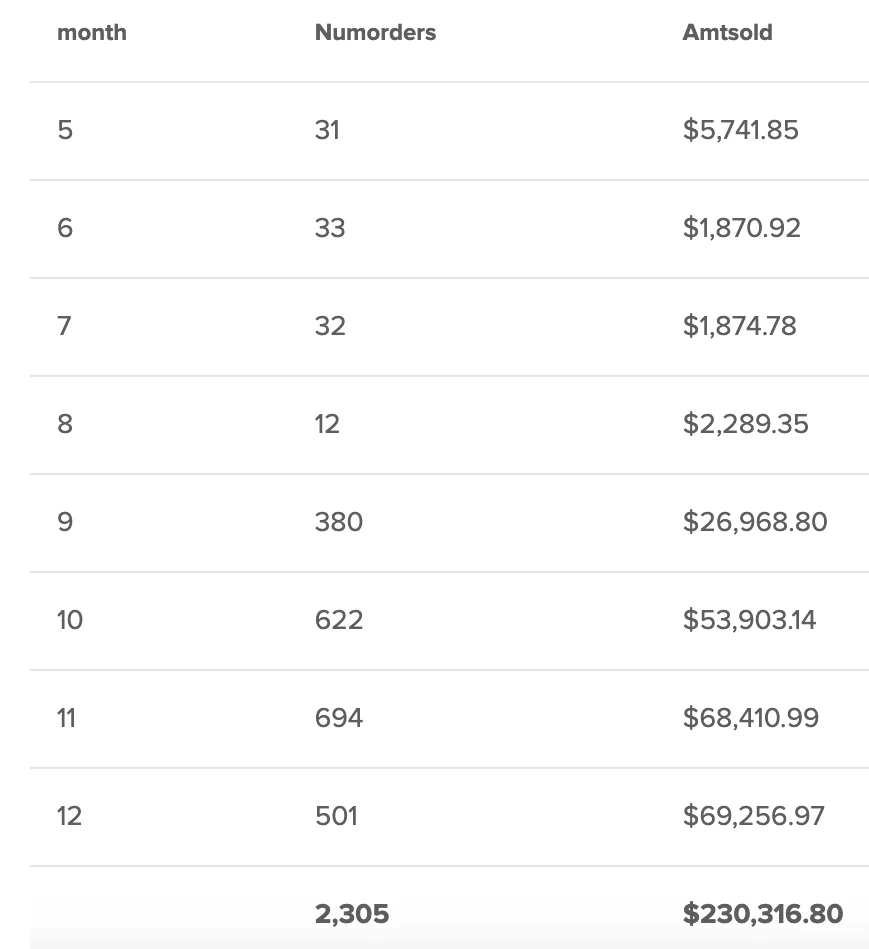
Same product. Same audience. Same person selling it. Different problem.
I wasn't wrong about what people needed. I was wrong about what they would recognise.
You can build an excellent product and still build the wrong offer.
And building the wrong thing is expensive. Not because of the software. Not because of the advertising. Because of the months of your life you don't get back.
Today I would never build that course the same way. I'd test the problem first. I'd test the promise. I'd see whether strangers responded.
Then I'd build.
And that's the sequence I want to give you.
So what are you actually trying to build?
Strip away the terminology and an online business is surprisingly simple. You need five things.
A way for the right people to find you
Organic content, advertising, search, referrals. Something that gets attention.
A page that makes a clear promise
Something that makes the right person stop and think: that’s exactly what I need.
A reason to give you their email address
Something useful enough that a stranger is willing to become a lead.
An offer
A clear solution to the problem that brought them to you.
A way to follow up
Because most people won’t buy the first time they see you.
Traffic → Page → Lead → Offer → Follow-up.

Once those five pieces work together you have something very different from posting all day hoping somebody notices you.
You have a selling system.
A stranger can discover you while you're having dinner. A lead can receive an email while you're asleep. A customer can buy while you're doing something else.
I've used those same pieces to sell affiliate offers, digital products and physical products. To fill client rosters. To sell out live events. Members of our community have used them in businesses I'd never have thought of.
The system doesn't particularly care what you're selling. But it cares enormously whether what you're selling solves a problem somebody actually wants solved.
Which is why you shouldn't build the whole machine first.
First prove there’s something worth putting through it.
Because building isn’t the expensive part any more
Someone had to research the market. Someone had to position the offer. Someone had to write the copy. Someone had to design the pages. Someone had to build them. Someone had to write the emails. Someone had to understand advertising.
If you could afford good people, brilliant. But you could easily be:
Before finding out whether you'd pointed all that work at the right opportunity.
If you couldn't afford the team, you learned everything yourself. That's what I did. Evenings. Weekends. Years of trial and error.
Later, when I could afford specialists, I hired them. And yes, it was considerably better.
But there's an obvious problem with that route.
Hiring the team was a reward for already succeeding. It was never a practical way to start.
Then something changed.
The maths broke.
We grew up with information technology. It made knowing things cheap.
AI is doing something different. It's making large amounts of work cheap.
Research. Writing. Design. Pages. Emails. Creative. Production that once required several specialists can increasingly be done with technology beside you.
Which means you don't need years to learn five professions. And you don't need $20,000 to hire them.
That's extraordinary. But it creates a new problem.
AI will build the wrong business just as enthusiastically as the right one.
Ask it to write fifty emails. It will. Ask it to design a funnel. It will. Ask it to package an offer. It will.
Ask it to build around an idea nobody urgently wants, and it'll help you do that too. Probably faster than you could have wasted the time yourself.
Which is why AI is not the advantage.
Judgement is.
It does the labour. You still have to decide what to point it at.
And that decision comes down to three things.
One Problem Solved
Before the website. Before the funnel. Before the content. Before the advertising. Before you spend months creating a product.
Make three decisions.
1. One problem
Not an industry. Not a niche. Not a broad transformation. A problem somebody wants solved now.
One is a market. The other is a problem. And the person whose hands are covered in puppy scratches doesn't need convincing that they have it. They're already looking for an answer.
2. One person
Not an avatar invented in a marketing worksheet. A real person experiencing the problem.
That's a person you can write to, because you know what's happening in their life when they encounter you.
3. One offer
Your product and your offer aren't the same thing. One product can solve several problems, and each problem can create a completely different offer.
Imagine one dog-training programme. You could sell it as:
- Stop your dog pulling on the lead in 14 daysFor the person being dragged down the street every morning
- End separation anxiety so you can leave the house againFor the person who hasn’t been out for dinner in eight months
- Stop puppy biting in seven daysFor the new owner whose hands are genuinely bleeding
Same expertise. Potentially the same underlying product. Three different problems. Three different buyers. Three different offers.
That's what most people miss. They keep rebuilding the product when they should be changing the aim.
Sell painkillers, not vitamins
A vitamin is something someone agrees would probably be good for them. A painkiller solves something they want gone today.
If there's one thing I want you to be able to do after reading this book, it's tell the difference before you spend six months building.
But we're going one step further. Because you shouldn't have to trust your own judgement either.
We’re going to test it.

Your aim is becoming your targeting.
For years, marketers obsessed over manually finding audiences. Interests. Demographics. Keywords. Followers.
Today the major platforms have become extraordinarily good at deciding who should see what. Meta, TikTok, YouTube. Their systems watch what people respond to and try to put relevant things in front of relevant people.
Which creates an enormous advantage for a small business, if your message is specific.
Say “I help people live better lives.” What is a recommendation system supposed to do with that? Who is it for? Why would they stop?
Now say “stop your puppy biting in seven days.” Suddenly there's something to match. A particular person, a particular problem, a particular outcome.
Your message gives the machine clues about who should see it.
That's why specificity isn't merely a copywriting trick any more. It's increasingly part of distribution.
You don't need a million followers. You need the right message to reach the right person.
Which is also why testing has got so cheap. You don't need a launch, a budget or an audience to find out whether a message lands.
$5 to $10 a day for seven days is enough to start seeing leads, and sometimes sales.
Not because that's a business. Because it's evidence. It tells you whether strangers, with no reason to be kind to you, respond to the problem you've chosen.
Which brings us back to the same decisions.
One problem. One person. One offer. One test.
The Weekend Test
This may be the most important part of the entire process.
Once you've found one problem, one person and one offer, you don't disappear for six months and build the whole business.
You ask the market.
Not with another survey. Not by asking your friends whether they like the idea. And not by asking a chatbot whether it thinks your business will work.
A weekend to create the offer. Seven days to test it.
Over a weekend you create the smallest credible version of the offer you can. A short guide. A consultation. A workshop. A simple service. A small digital product. An affiliate recommendation around a problem you understand. Or simply a page describing what you intend to create.
It doesn't need to be finished. It needs to be real enough that somebody could say yes to it.
Then you spend seven days putting it in front of real people. If you already have an audience, start there. If you don't, a small amount of paid traffic will do.
Seven days is long enough to see a pattern and short enough that you haven't committed to anything. At five to ten a day, the whole test costs less than a night out.
You're looking for evidence. Do people stop? Do they click? Do they give you their email? Do they enquire?
And ideally:
Will a stranger pay?
Because that's a very different question from my wife thinks it's a great idea, or everyone at work says I should do this.
A stranger has no reason to support you. They don't know you. They don't care how long you spent making it. They act because the problem matters to them.
That's useful information.
Think of it this way
You can spend six months building something, then ask whether anybody wants it.
Or you can spend a weekend building the offer, seven days testing it, and $35 to $70 finding out, then decide whether it deserves six months.
If the test fails, good. You've learned something cheaply. Change the problem. Change the person. Change the offer. Test again.
You're not starting over after six months. You're adjusting after a weekend.
But if strangers respond, something important has happened. You're no longer building on belief.
You have evidence. And evidence changes the way you build.
Kim did this last month
Kim is a coach and member of our community. She had a method she used with clients and no product built around it. So she made the smallest version she could, a workbook, and put it in front of people before building anything else.
“Ten sales may not sound huge, but to me it feels like an important first proof that the message is connecting with people outside my immediate circle.”
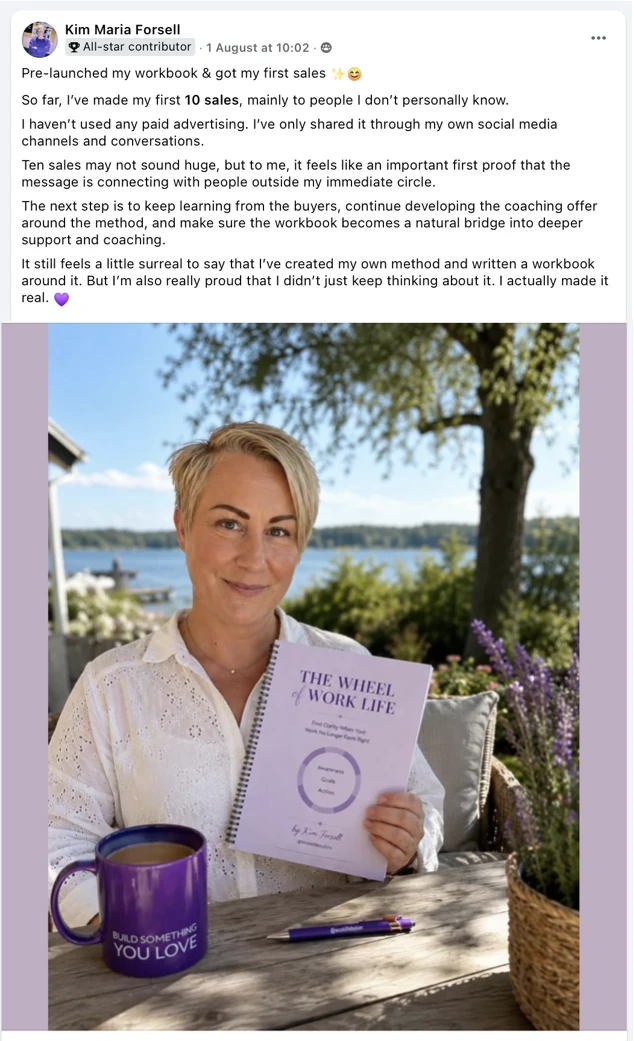
Ten sales. No paid advertising. A digital version of her workbook that existed before the coaching offer it was built to lead into.
That is the Weekend Test, exactly as described. The smallest credible version of the offer, in front of real people, before building the rest. And the sentence that matters most in her post is the one about strangers: mainly to people I don’t personally know.
That is the difference between friends being kind and a market saying yes.
Casey did exactly this
Here is the same thing a step further on, from an offer we just launched.
My partner Casey is a positive psychology coach. She already had expertise. Already had clients. Already knew her subject.
She wasn't sitting around asking what random online business she should start. Instead she paid attention. And she kept hearing the same frustration from clients.
“I can't stick to a routine.”
There was the problem.
So instead of spending months creating an enormous wellness programme, we tested something much smaller. A simple digital journal. Daily check-ins around self-care and mindfulness routines.
The first version wasn't a beautifully engineered product. It was a PDF we built with AI.
Then we tested it. Around $10 a day in Facebook advertising for two weeks. Broad targeting.
And strangers bought. The first sale came forty minutes after the ad went live.
Real people. Real money.
Proof.
Forty minutes was faster than we had any right to expect, and it isn't really the point. The point is that we knew within days rather than months, and we knew it from strangers rather than from friends being kind.
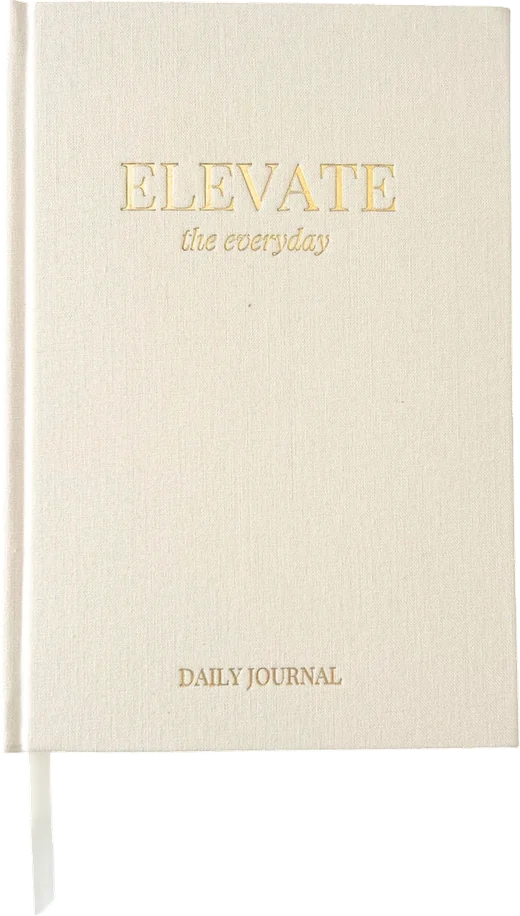
Only then did we start thinking bigger. We created a beautiful physical version, and around fifteen percent of buyers upgraded to the printed journal. We put it on Amazon. Built an email audience. Started sharing useful wellness content. Recommended products we genuinely use. And eventually launched a membership for people who wanted ongoing support.
Some days one affiliate email has generated more than the journal sales.
But here's the important part. None of that was the plan on day one. We didn't sit down and architect seven revenue streams. We found one problem, created one offer, tested it, and let the market show us what deserved to come next.
Choose → Test → Build. Not build, hope, start again.
A reader found herself on page 14
Long before any of this, I sold houses. The book mentions the brand I built for the estate agency I worked for, seventeen years ago.
Then Vivienne, who is in our community, read it and posted this.
“Talk about proof of authenticity.”
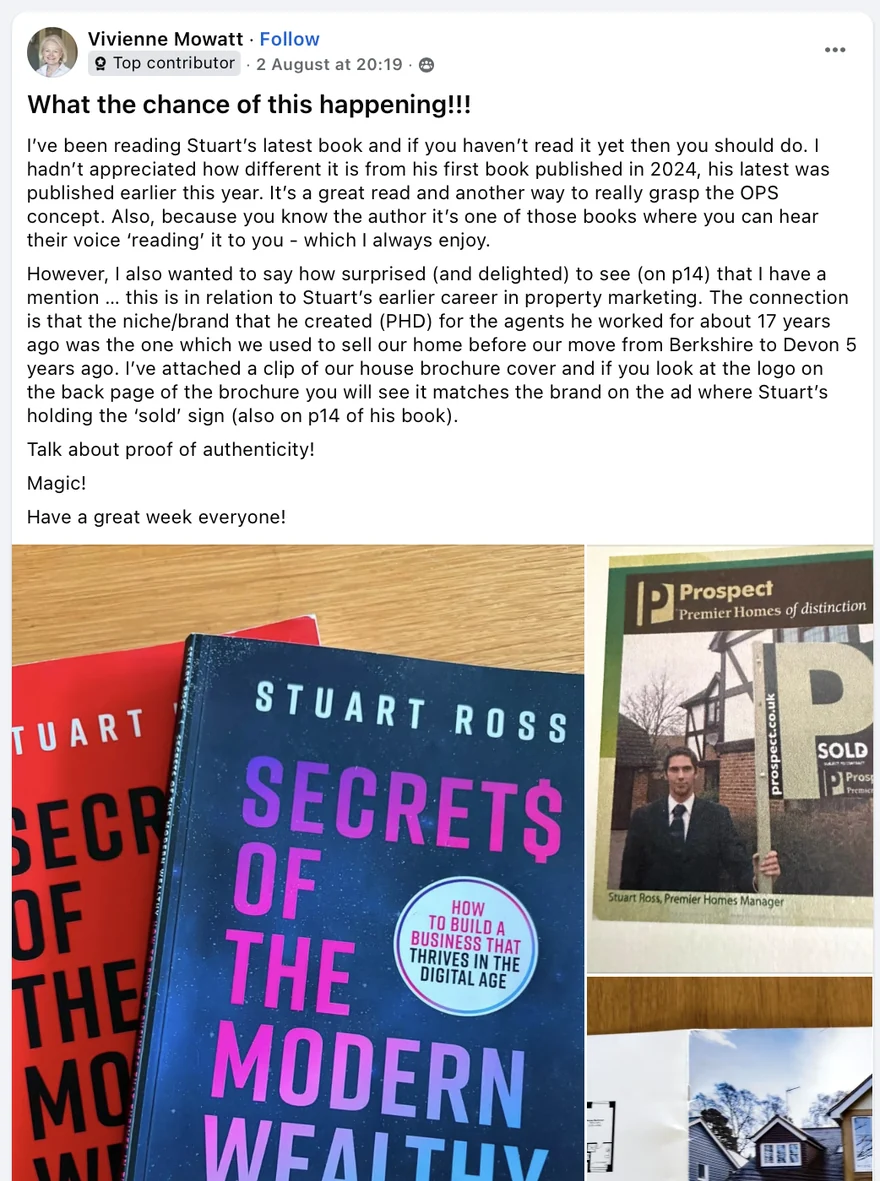
Neither of us had any idea. Which is a long way of saying: the story in this book is one I actually lived, and occasionally somebody turns up who was there for a piece of it.
You may already have everything you need
Some arrive with decades of experience. Some with professional knowledge. Some simply with a passion they’ve stayed with long enough to become unusually good.
What they usually lack isn’t something valuable. It’s the aim.
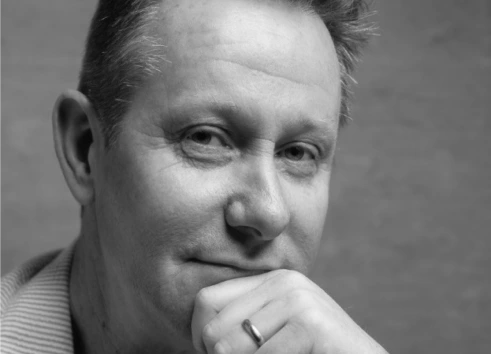
Mike and Lisa didn’t arrive as internet entrepreneurs. They found a very specific problem: government support pensioners qualify for but never claim, because the paperwork defeats them.
“Life-changing stuff. The training was step-by-step even for someone not tech savvy. I’d never done anything online before, and now I have a 7 figure online business and work with my wife on our terms.”
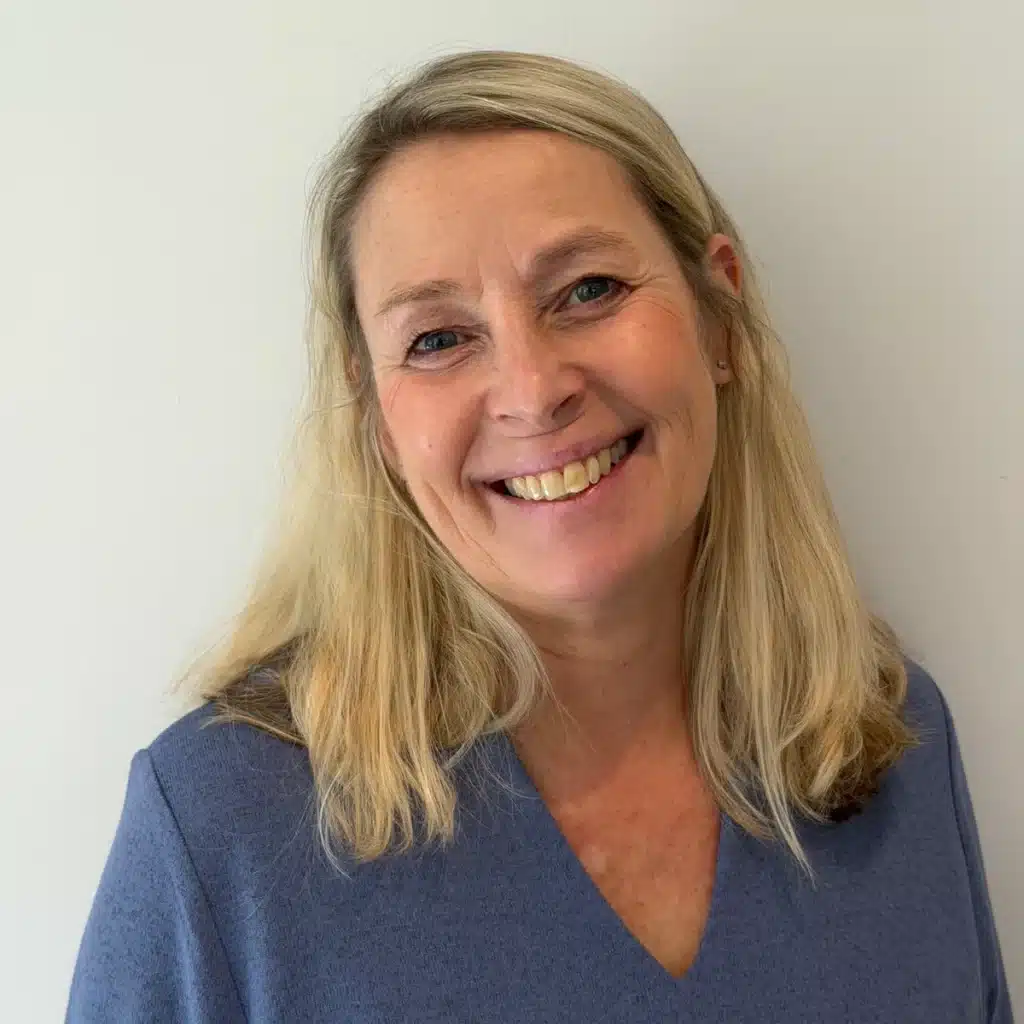
Maikel already knew his subject. In fact he’d done the difficult part most people assume is the answer: he created the course. It took him six months, maybe a year. Then he launched it, and almost nobody bought.
The expertise wasn’t the problem. The product wasn’t the problem. The aim was.
“I knew it was good, I’d put everything I had into it. Then I released it and nobody bought it. I just wasn’t finding my customers. Now? Dollar leads, five percent conversion. They were looking for me.”

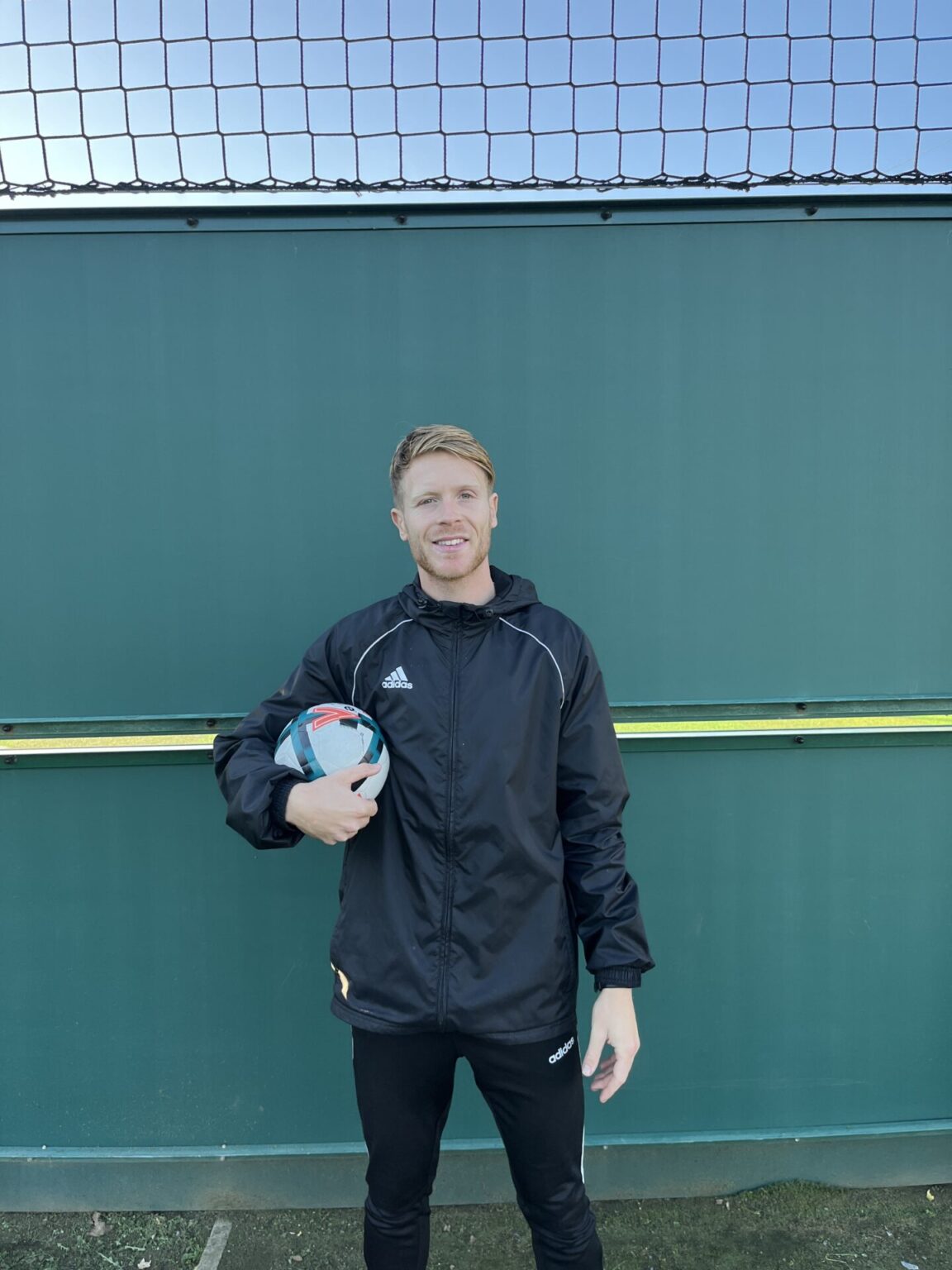
Josh loved football. The question was never how do I build a football business. It was: what is one important problem in football that you can solve?
“I sat down with Stu, and he simply said to me, what is the one key problem that you can solve in football? Since that conversation I’ve become the biggest youth football mindset coach in the UK.”
Three different people. Three different starting points. The same first move: find the problem. Then test whether the market agrees.
Especially if you've spent years getting good at something
Maybe you're a consultant. A coach. A tradesperson. A designer. A marketer. A therapist. A teacher. An accountant. A business owner. A manager. A specialist.
Or simply someone who's spent enough time solving a particular problem that you've forgotten how valuable what you know could be to somebody encountering it for the first time.
Your problem probably isn't a lack of knowledge. It may be the opposite.
You know too much.
When someone asks what you do, you want to explain the entire transformation. Every component matters because you understand how they fit together.
But a stranger doesn't understand the whole transformation yet. They understand the problem hurting them today.
You're not being asked to throw away everything you know. You're choosing the door they walk through. Once they're through it, you can give them everything.
Or maybe you've already built a successful business
You know how to sell. You know how to deliver. You know how to get things finished.
But your business comes with staff, overhead, suppliers, premises, stock, clients, meetings or complexity. And you've occasionally wondered whether you could turn what you've learned doing this into something much lighter.
Something digital. Something with better margins. Something that doesn't require another building, another team or another layer of management.
If that's you, you're in an unusually strong position. You're not starting with nothing. You have years of problems solved, lessons learned, mistakes made and judgement earned.
The question is simply which part of it is worth building around. That's what this book helps you find.
And if you're starting from scratch?
You don't need a huge audience. You don't need to call yourself an expert. You don't necessarily need your own finished product yet.
But I do want you to bring something to the table. Curiosity. Experience. Knowledge. A skill. A problem you've solved. A subject you've stayed interested in long enough to understand. And most importantly, a willingness to actually test something.
If you're looking for seven dollars' worth of motivation and another PDF to leave unread in a downloads folder, don't buy this. There are thousands of those already.
This book is designed to get you to a decision.
By the end, I want you to be able to finish one sentence
“I help ______ solve ______ with ______.”
That's it. A person. A problem. An offer.
Something concrete enough that you can put it in front of real people. Something specific enough that they can say yes, that's for me, or no, it isn't.
Both answers are useful. Because the worst answer isn't no. It's spending six months building before you've ever asked.
But that's not where we stop. I also want you to be able to say:
“And here’s how I’m going to test whether they actually want it.”
That's the outcome. Not seventeen ideas. Not a forty-eight page business plan. Not six months of production. One clear commercial hypothesis, and a way to test it.
What’s inside the book
The book walks you through the thinking in order. You'll discover:
But I don't want you merely reading it. So I've included three things designed to move you from idea, to decision, to evidence.
Three things that turn thinking into action

The full hour with Mike and Lisa
The clip on this page is a couple of minutes. Inside, you get the whole conversation it came from: what it actually took, starting from a divorce and losing the house, through to a seven-figure business built around one problem.
It is the least polished thing we give you, and probably the most useful. Two people describing the parts nobody puts on a sales page.
And then you'll have a decision to make
If nobody responds, you probably shouldn't build the whole thing yet. Excellent. You've potentially saved yourself months. Adjust. Test again.
But if people do respond, if strangers click, opt in, ask questions, or better still buy, then your problem changes. You're no longer asking what should I build? You're asking how do I build this properly?
And that's a much better problem to have.
This is where LaunchPad comes in
You may reach this point and think: I've got it. I'll build this myself.
Excellent. Seriously. Go build it. The book has done its job.
But you may think: I know the problem. I know the person. I know the offer. I've got evidence people are interested. I just don't want to spend the next six months becoming a copywriter, designer, researcher, funnel builder, email marketer and technologist to turn it into a real business.
That's a different problem, and it's why we built LaunchPad.
LaunchPad isn't required to use this book. You don't need it to find your idea. You don't need it to run your first test. And I'm not asking you to buy it now.
First choose. Then test. If you've got something worth building and you'd like an AI team beside you for the actual building, we'll show you LaunchPad. Then you can decide. No mystery, no surprise.
The book helps you choose. The test gives you evidence. LaunchPad can help you build. In that order.
This still works even if…
None of those is the thing that decides it. The thing that decides it is whether you picked a problem somebody actually wants solved, which is why that decision comes first.
Why is all of this $6.99?
Because I'd rather earn your trust before asking you to make a bigger decision.
It costs us more than $6.99 in advertising to put a customer on this page, so we may lose a little money selling you the book. That's deliberate. Because after helping thousands of people, we've learned something.
The best customers aren’t the ones who buy the most information. They’re the ones who use something, get a result, and then decide they want to go further.
That's what I'd rather happen here. Buy the book. Use the Finder. Find your problem. Create your offer. Test it. Get a signal.
Some readers will take the framework and build completely on their own. Others will eventually want our help. We're comfortable with both.
There's no subscription attached to buying the book. No trial quietly converting next month. No requirement to purchase anything else.
If you don't think it was worth what you paid, tell us and we'll refund you. No form. No argument. Keep the book either way.
What you're really risking isn't $6.99
It's an afternoon. And perhaps a weekend testing what you discover. Because the alternative has a cost too.
- Another month researching.
- Another course.
- Another notebook full of ideas.
- Another website started before the offer is clear.
- Another six months building something before discovering nobody urgently wanted it.
I've done that. It cost me considerably more than seven dollars.
And eventually I discovered a much better sequence.
Choose. Test. Build.
Find the problem. Find the person. Create the offer. Put it in front of real people. Look for evidence. And build only when you've got a reason to.
One Problem Solved
124 pages. Read it in an afternoon.
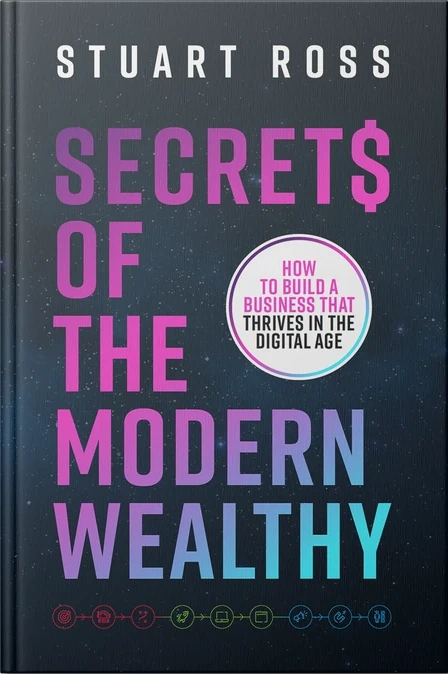
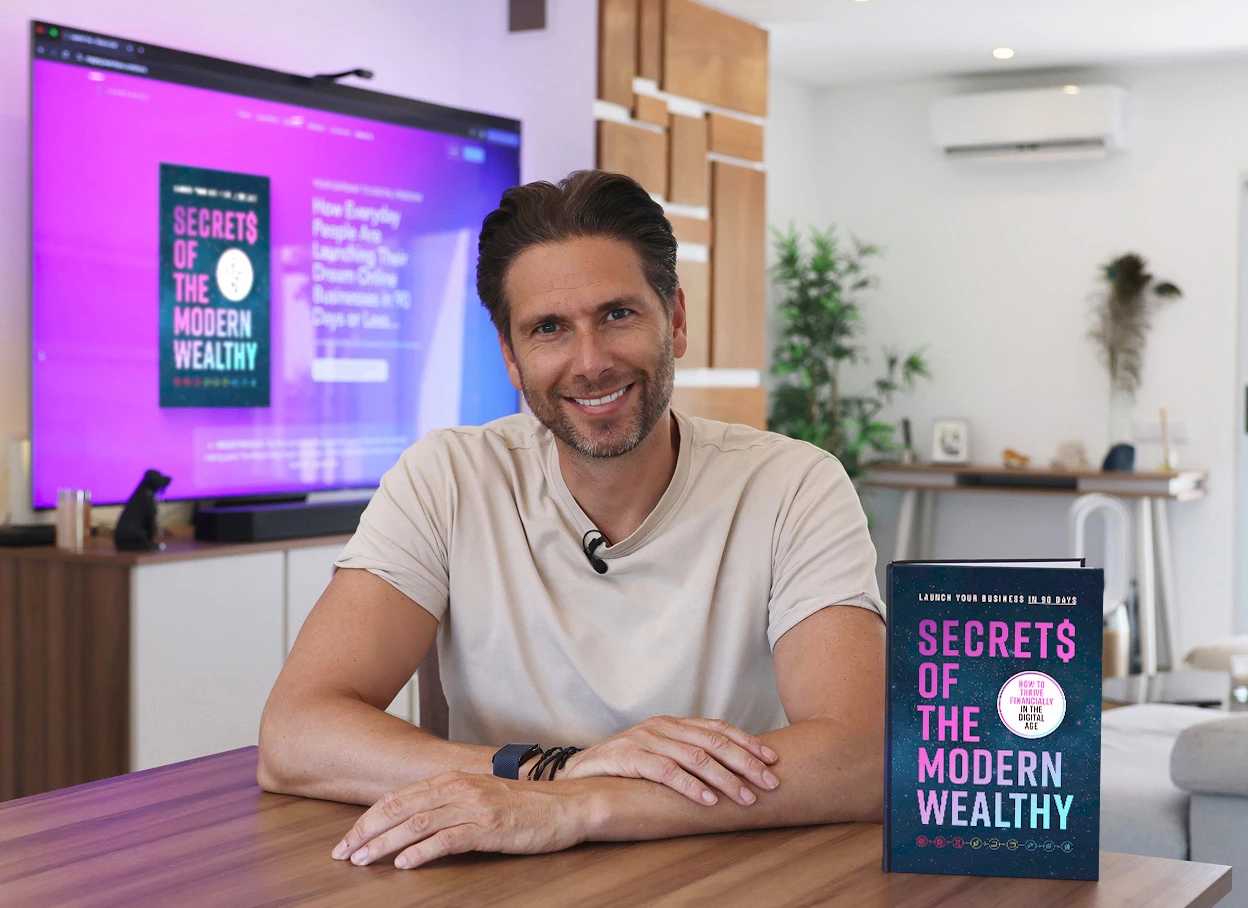
- The complete book, Secrets of the Modern Wealthy, instant access
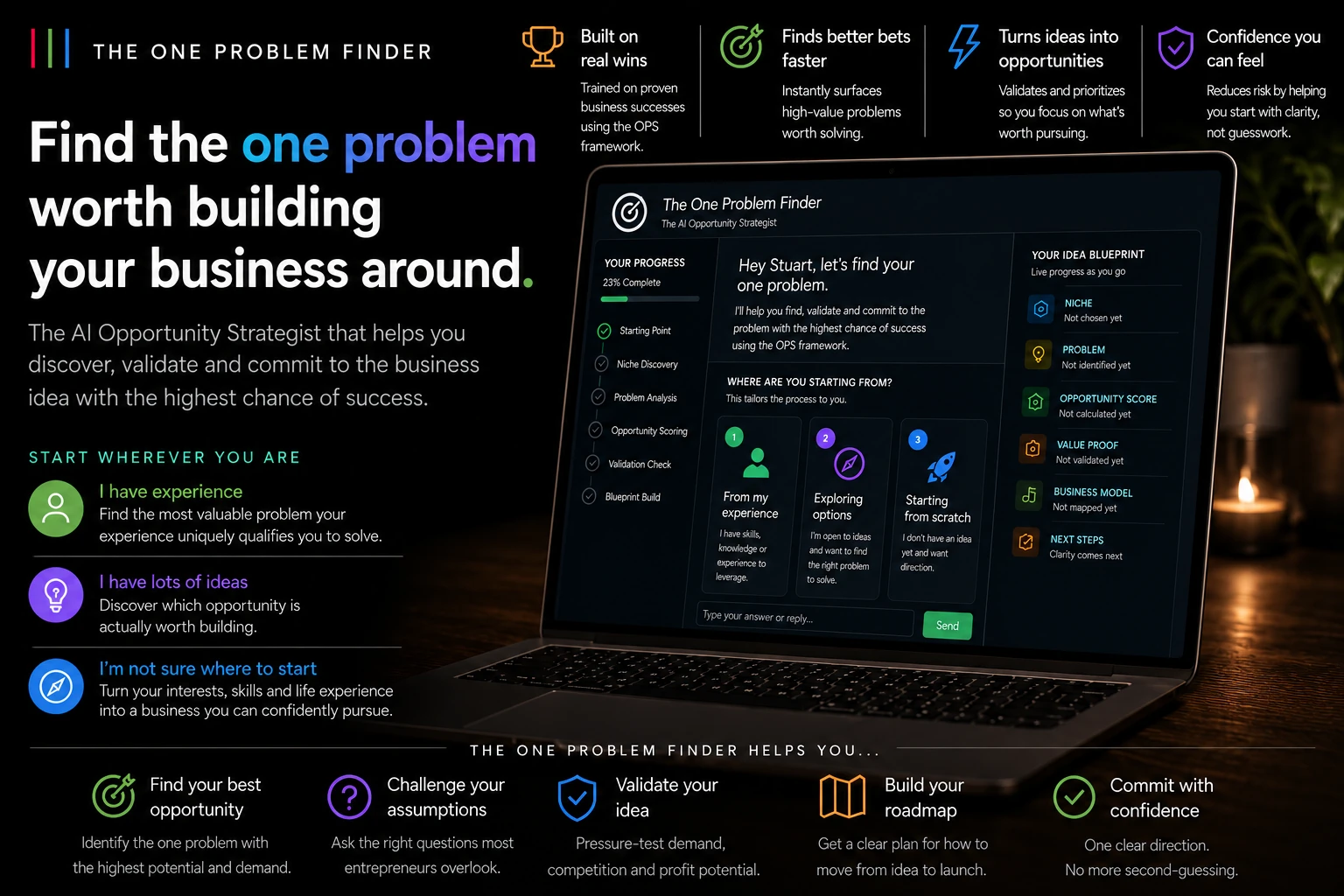
- The One Problem Finder, $99 credit included
- The Build & Test Masterclass, $99 value
- An opportunity to pressure-test what you land on with us
- Refund anytime if you don’t think it was worth it
“I checked off each step and went from idea to launching my first online business in just over two months, working 20 minutes or so a day. Not vague advice, exactly what to do first, second, third.”Douglas E., reader
Send me the book — $6.99Instant access · 124 pages · refund anytimeOne Problem. One Person. One Offer. One Test.
Paperback and audiobook also available at checkout.
Questions people actually ask
There are two ways you can leave this page
You can keep researching. Keep watching. Keep collecting ideas. Keep wondering which one is worth your time. And perhaps a month from now you'll be closer. Perhaps not.
Or you can spend an afternoon answering three questions. What problem? Which person? What offer?
Then spend a little time discovering something even more useful: does the market agree?
And finish with something you can actually test. Not a business plan. Not another year of learning. A direction.
Because you don't need another seventeen ideas. You don't need another six months of planning. And you certainly don't need to build the whole business before finding out whether anyone wants it.
You need one idea worth testing.
Instant access · 124 pages · refund anytime, no questions
Thanks for reading this far.Stuart Ross
P.S. August: 12 sales. September: 380. Same course, same audience, same person selling it. The difference was the problem I led with. That’s why I want you to make this decision before you build. Get your copy →
P.P.S. If you finish the process and know exactly what you want to build but don’t want to assemble the research, positioning, copy, pages, emails and technology yourself, we’ll show you LaunchPad. If you’d rather build independently, do that. Either way you’ll be starting from a much better place: knowing exactly what you’re building and who it’s for. Get your copy →
The sales figures and customer stories on this page describe specific past results. They aren’t typical results or promises of what you’ll earn. Business involves risk, effort and execution. Your results will depend on your experience, decisions, market and work.